Gout kidney problems: what your doctor may not have explained
Gout kidney problems explained, how gout and kidneys affect each other, what changes in treatment, and what to do next.
TL;DR: Your kidneys filter uric acid out of your body. When they can’t keep up, uric acid builds, and gout follows. But the connection goes both ways: uncontrolled gout can also put stress on your kidneys over time. If you have both gout kidney problems and reduced kidney function, your treatment may look a little different, but better days are still absolutely possible. This post breaks it all down in plain language.
Some people living with gout and kidney disease have possibly heard the terms ‘uric acid’ and ‘kidney function’ mentioned at the same appointment, but the reality is that many have not. But even if you had heard them together, the reality is rarely does anyone sit down and actually explain what the connection is, in plain language, and what it means for your care going forward.
But that’s what we’re here to do.
Not to alarm you. Not to add to the pile of things you’re already managing. But because you deserve the full picture, and because understanding this connection is one of the most important things you can do for your long-term health.
How your kidneys manage uric acid
Here’s something most of us were never taught, your kidneys can be the main reason uric acid builds up in the first place.
Uric acid is a natural byproduct of the body breaking down substances called purines, found in certain foods and in your own cells. Under normal circumstances, your kidneys filter uric acid out of your blood and remove it through urine. It’s a quiet, constant process happening in the background every day.
But when kidney function is reduced, even slightly, that filtration process slows. Uric acid starts to accumulate in the blood. And when uric acid levels rise and stay elevated long enough, crystals can form in the joints. That’s what causes a gout flare.
Most people think gout comes from what they eat. But often, the deeper story is what their kidneys aren’t able to clear out.
Chronic kidney disease (CKD) affects the kidneys’ ability to filter waste from the blood over time. It’s one of the common reasons people develop hyperuricemia (elevated uric acid), in the first place. And this is why gout and CKD show up together so frequently, they share the same root mechanism.
The two way street
Here’s where it gets important, and where many patients feel like they were left without the full picture.
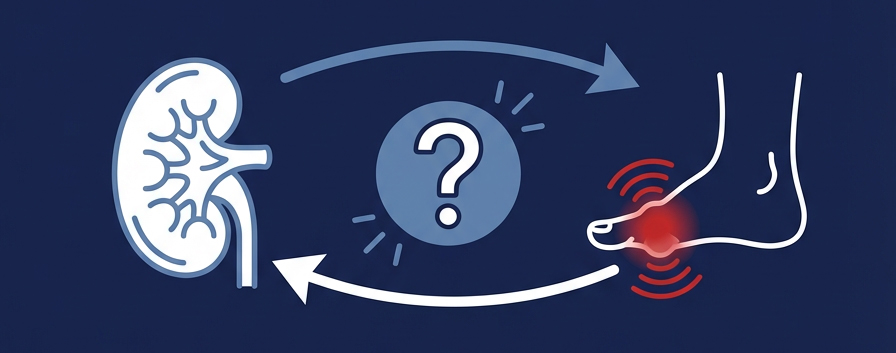
One of the most common questions we hear is “does kidney disease cause gout?” The honest answer is that it can be a major contributing factor. But the relationship between gout and kidney disease doesn’t just go one direction. It actually goes both ways.
When kidney function is reduced
Uric acid clears more slowly from your blood
Flares may happen more frequently or be harder to get under control
Some standard gout medications need to be dosed carefully or adjusted
Your uric acid target, the goal number your doctor is aiming for (under 6!), may matter even more
When uric acid stays elevated over time:
It may add stress to the kidneys themselves
Long term high uric acid has been associated with faster progression of kidney disease in some patients, and a common question patients ask is whether gout can lead to kidney failure; while that outcome is not inevitable, it emphasizes why controlling uric acid matters
This is why rheumatologists and nephrologists often say that managing gout well is also a form of protecting your kidneys. And managing your kidney health well is part of managing your gout.
You can’t fully address one without understanding the other. They’re connected, and your care team should be treating them that way.
If no one has talked to you about both sides of this, you’re not alone. Many patients tell us the same thing. That’s exactly why we’re having this conversation.
What changes about your treatment, and what to ask
Learning about this connection doesn’t mean your treatment plan needs to completely change. But it may mean some adjustments should be made, and it definitely means more communication.
Here’s what can shift when gout and kidneys are both part of your health picture:
Medication dosing may need adjustment.
Come medications are processed by the kidneys, and some medications will need adjustments for those with lower kidney function, talk to your doctor about these adjustments and protecting your kidneys.
More frequent labs may be recommended.
Tracking both your uric acid level and your kidney function markers (like creatinine and eGFR) together gives your doctor a much clearer picture of how well your treatment is working, and whether adjustments are needed.
Your treatment plan may evolve over time.
Kidney function can change. Gout can progress if uric acid stays uncontrolled. Your care plan isn’t a one-time conversation, it’s an ongoing one. What works at one stage of your journey may need to be revisited.
Coordination between specialists matters.
If you’re working with both a rheumatologist (gout specialist) and a nephrologist (kidney specialist), it’s worth making sure they’re communicating about your care, or at minimum, that you’re sharing information between them. Ask your rheumatologist: “Are you aware of my kidney function when making medication decisions?” That question alone can open up an important conversation.
This isn’t a worse version of gout. It’s a different version, one that needs clearer communication, closer monitoring, and a care team that sees the full picture of who you are.
You Deserve the Full Picture
If you’ve been living with gout for years and this is the first time anyone has explained the kidney connection, please hear this:
That’s not your fault. And it’s not too late.
Understanding this connection gives you something powerful, the ability to ask better questions, make more informed decisions, and advocate for care that addresses your full health, not just the last flare.
Gout kidney problems are real, but they are not a dead end. Gout is a manageable, treatable condition. Even when kidney disease is part of the story, there are paths forward. There are treatment options. There are answers. And there are people, like the GSGA community, who have navigated this and are here to walk alongside you.
“You don’t have to figure this out alone. We’ve been there. And we’re not going anywhere.”
Start learning what’s really possible with gout care.
*GSGA is a patient-led nonprofit. This content is for educational purposes only and does not constitute medical advice. Always consult your healthcare provider about your individual care.
Our Gout Journey Roadmap walks you through exactly what to do based on where you are right now.
Clicking through resources is a great start, but when you’re ready for step-by-step support, the Roadmap is where things finally click.
Whether you’re unsure if it’s gout or trying to break the flare cycle, this expert-backed guide shows you what to do and why it matters, with zero fluff. Just choose your phase and get a clear path forward.