
Real gout support starts here
You flare two, maybe three times a year. By now you know the warning signs. You know which shoes you can wear during a flare and which ones become weapons. You know how many days you’re going to lose, which meetings you’ll have to move, which excuse you’ll use when somebody asks why you’re limping.
You’ve gotten good at this.
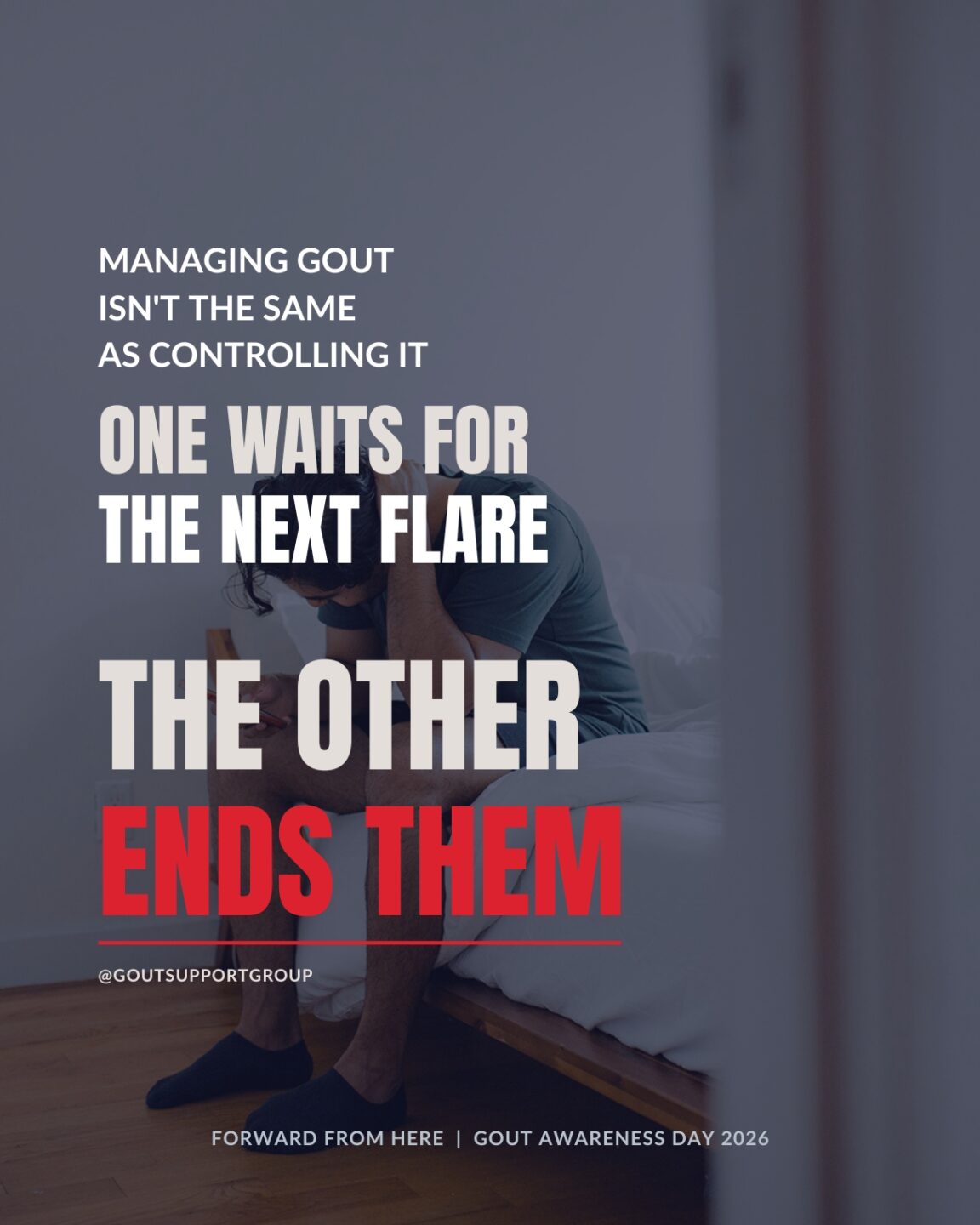
And somewhere along the line, you started calling that “managed.”
I want to talk to you about that word, because it comes up constantly in our gout support community. But, to be honest, that’s not actually the right word for what is happening.

What’s actually going on between gout flares
The flares are loud. They get all the attention. Yours (obviously!), your doctor’s, the people around you who can see you’re hurting. So it makes sense that we measure our gout by them. Two flares a year sounds like two times a year you have gout. The rest of the time, it feels quiet. You feel fine. You assume the disease is taking a break.
But, it’s not.
Gout happens when your uric acid level gets high enough that crystals start forming in your joints. Those crystals don’t pack up and leave between flares. They’re still there. And if your uric acid stays high (above 6.0 mg/dL), even a tiny bit, more keep forming. Slowly, quietly, on all the days you feel completely normal.
A flare is your body finally reacting to crystals that have been there the whole time.
That’s why gout is called progressive. Even on the days nothing hurts, the underlying process keeps going. Joints accumulate damage you can’t feel yet. Some patients eventually develop tophi, those firm lumps under the skin, without realizing how long they’d been building. (Read more on gout tophi in this post) Some find out from imaging that changes have already started in joints that haven’t given them symptoms.

Uncontrolled gout symptoms, the version nobody describes
When you hear “uncontrolled gout,” you probably picture somebody in a worse spot than you. Somebody flaring every month or so, ER visits, mobility problems. The word sounds dramatic.
But in real life, uncontrolled gout usually looks pretty ordinary.
Something like this:
- Flaring more than once a year! (that may not seem often, but you really can live with 0!)
- Only taking medication during a flare, or forgetting your daily meds more than occasionally
- Not knowing what your uric acid level is, or what it should be (hint, under 6.0 mg/dL)
- Being on the same treatment plan for years even though the flares haven’t stopped
- Reshaping your life around the disease, even in tiny ways, your shoes, your travel, your social calendar, instead of treating your gout to target (yup, that ‘under 6.0 mg/dL’ number again)
If any of that sounds like you, your gout isn’t actually as controlled as it’s been feeling. That’s not a diagnosis from me. I’m not your doctor. But it’s a pattern most of us recognize once somebody finally names it.

That 6.0 mg/dL gout number I probably haven’t mentioned enough yet, lol
Here’s the detail about that number and your gout, it’s your uric acid target number. Just like blood sugar for diabetics, it’s important to know and understand, and try to reach it.
It’s 6.0 mg/dL. Below that.
Below 6.0, the uric acid crystals that have been quietly building up in your joints actually start to dissolve. Not just stop forming, actually dissolve and go away. Flares get less frequent. For a lot of patients, they eventually stop. The progressive part of the disease, the part doing damage on the days you feel fine, slows way down. In a lot of cases, it stops too.
This approach has a name. It’s called treat-to-target, but we like to call it proactive care too, and it’s been the standard recommendation in rheumatology for years.
I want to say that part again, because it threw me when I first heard it, this isn’t new! This isn’t experimental. The medications that get patients to that target, urate-lowering therapies, have been around for decades. Multiple options. Combinations for patients who need more than one. Pathways for patients with kidney issues or other complications.
What’s missing for most of us wasn’t the medicine. It was somebody actually walking us through it. The right gout information, at the right time, could change everything.

Gout flare treatment options, the two questions
When most patients ask about gout treatment options, they mean “what do I do when I’m flaring.” Fair question. The answer is probably the stuff you already have access to, colchicine, NSAIDs, steroids, meds aimed at the inflammation in the moment.
But the question that changes your life is a different one, how do I stop having flares in the first place?
That’s a different category of medicine. Daily. Aimed at the uric acid in your blood, not the flare in your joint, that’s what helps gout long-term.
A lot of patients have actually been prescribed something for that, like allopurinol or febuxostat, and possibly didn’t realize fully what it was for. Took it. Didn’t feel different. Maybe stopped during a flare because nobody told them not to. Concluded it wasn’t doing anything.
It probably was. They just weren’t on enough of it, long enough, with a number to aim at. (c’mon, you know the number now, say it with me …. under 6.0 mg/dL)
If you’re not sure whether you’re currently on a urate-lowering therapy, what your dose is, or what your last uric acid level actually was, those are three real questions to bring to your next appointment. They’ll change the conversation.
Real gout support means saying the hard part out loud
I want to pause for a sec here because I know how this kind of post can land. If you’ve been doing your best with gout for years, and you’re reading this realizing your version of “managed” wasn’t actually the goal, I get it, that’s a lot.
It’s not on you.
This is what real gout support sounds like, by the way. Not blame, not a lecture about diet. Just somebody finally walking you through what’s actually going on. Gout has been treated as a minor inconvenience for a really long time. The whole “rich man’s disease” thing kept patients embarrassed and kept doctors unhurried. Most of us did exactly what we were told to do. The problem was that nobody was telling us what to ask for, and that dang gout stigma just keeps getting in the way.
But, you got to this post somehow, it was made exactly for you, and now you have more info to take to your doctor, so you can change your life for the better.

Where to go from here
The Gout Roadmap is the gout support tool we wish had existed when we started. (I’m referring to a time when Google only gave cherry juice options) It walks you through where you actually are right now, what your next step might look like, and what questions to bring into your next conversation with your doctor.
If this post sounds like you, the places to start are Stage 3 (you have a diagnosis and meds, but you’re still flaring) and Stage 4 (you think you’re managed but aren’t sure your plan is actually doing the job). Both stages walk you through the uric acid number, what to ask, and what your options look like from here.
As a gout patient who lived with uncontrolled gout for years, I highly recommend you go check that out right away, like now. Here’s the link for ya,
Find your stage on the Gout Roadmap → goutsupportgroup.org/gout-roadmap
If you’ve been kinda wondering whether what you’ve been calling “managed” was actually as good as it gets, I’m saying it’s probably not. Most of us only got here (flare free life) because somebody finally said it out loud.
Now you’ve heard it too.
Featured
Articles
What other patients are reading next



Don’t just learn about gout, start your gameplan
Our Gout Journey Roadmap walks you through exactly what to do based on where you are right now.
Clicking through resources is a great start, but when you’re ready for step-by-step support, the Roadmap is where things finally click.
Whether you’re unsure if it’s gout or trying to break the flare cycle, this expert-backed guide shows you what to do and why it matters, with zero fluff.
Just choose your phase and get a clear path forward.


