
August 18, 2026
How to Talk to Your Doctor About Gout (And Actually Get Somewhere)
Your Gout Doctor Conversation – What to Ask and How to Prep
Make your next gout doctor conversation count. Here’s how to prepare, the questions to ask, and what to do if you get brushed off.
Most gout appointments go one of two ways. Either you’re mid flare, in too much pain to think straight, and you just want something to make it stop, or you’re feeling fine, so the whole thing feels low stakes, and you leave without asking the questions that will actually help get your gout under control.
Let’s go into the next one fully prepared, so you can change the entire direction of your gout journey. You don’t even need to do hours of research or be fully knowledgable about everything around gout, just knowing what to ask and what a good answer sounds like is the perfect place to start.
So, here’s how to make that gout doctor conversation count.
First, your PCP is a fine place to start
You don’t have to find a specialist right away. Your primary care doctor can order the first test, start you on treatment, and refer you onward if needed.
That said, gout is inflammatory arthritis, and rheumatologists are the specialists who focus on it. If your case is stubborn or you keep getting brushed off, that’s the direction to head. One insider tip, call the office before you book and ask whether the doctor actually treats / specializes in gout. Not every rheumatologist focuses on it, and you’d rather know before you’re sitting in the waiting room, especially these days when you likely waited months for the appt.
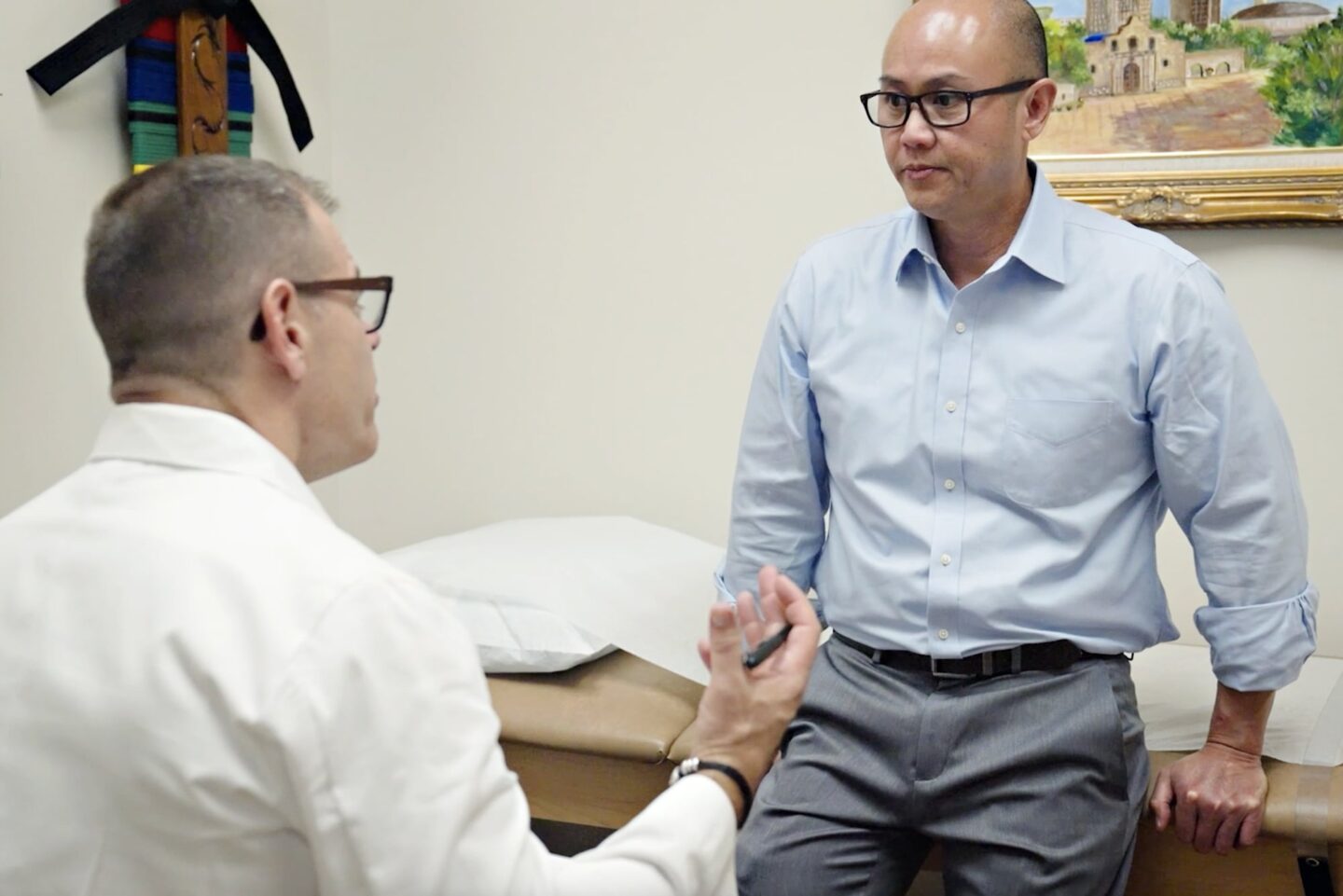
How to prepare for a doctor’s visit about your gout
The single most useful thing you can do is show up with evidence. A log of your flares is much harder to wave off than “it hurts sometimes.”
Before your appointment, put together:
- A flare log. For each attack, jot down the date, which joint, how bad the pain was (1–10), and how long it lasted. Photos of a swollen, red joint help a lot too, flares fade fast, and a picture proves what your calm looking foot can’t.
- Your most recent uric acid number, if you have one. If you’ve never had the test, that’s the first thing to ask for.
- A list of your current meds, including anything you take for flares and any blood pressure medication (some water pills raise uric acid).
- One clear goal for the visit. Not “figure out my gout”. Something specific, like “I want to know if my uric acid is at target and what my options are if it isn’t.”
Write your questions down before you go. It’s easy to forget half of them once you’re in the room!

What questions should I ask my doctor about gout?
You don’t need to ask all of these. Pick the ones that fit where you are. But these are the questions that tend to unlock better care:
- “Can I get a serum uric acid blood test?” This is the foundational one. One note: uric acid can read deceptively low during an active flare, because it’s left your blood and formed crystals in the joint. A “normal” result mid-flare doesn’t rule gout out, ask about retesting once the flare settles.
- “What’s my number, and what should it be?” The target most guidelines point to is below 6.0 mg/dL. That’s the level where existing crystals can dissolve and new ones stop forming. Knowing your number and the goal turns a vague condition into something you can actually track.
- “Am I being treated to a target, or just to my symptoms?” This is the big one! Flare medicine treats the pain. It doesn’t lower the uric acid actually causing it. Ask whether your plan is aimed at getting your number down for good, or just putting out fires as they start.
- “Should I be on a daily uric acid lowering medication?” If you’re flaring more than rarely, this is worth a real discussion.
- “Can I keep flare medication at home?” So you’re not stuck waiting on a prescription the next time one hits.
- “If we start treatment and I flare more at first, what’s the plan?” Flares often increase for the first few months of uric acid lowering therapy as old crystals dissolve. That’s the treatment working, not failing, and there’s medication to cover you through it. A good doctor will bring this up. If yours doesn’t, raise it yourself.
- “Could there already be crystal deposits built up in my joints?” If you’ve had gout for years, there may be. Some treatments can actively clear those out, it’s absolutely worth asking about.
Steal these scripts
If you freeze up in appointments, here’s language you can more or less say word for word:
“I think I’ve had gout flares. Can we do a uric acid blood test, and can I get flare medication to keep at home?”
“Is my current plan getting my uric acid below 6? Is there an option that also clears out the crystals already in my joints? And can we plan for flares while my body adjusts?”
Copy them into your phone. Read them off the screen if you need to. There’s nothing wrong with that!
If you get dismissed
It happens, and we know it’s exhausting. Gout gets waved off constantly. Especially in women, younger people, and anyone whose flares don’t hit the classic big toe. Some doctors still treat it like you’re just eating wrong. You’re not!
A doctor brushing off your symptoms just means you may need a different doctor. Asking for a second opinion isn’t rude or dramatic. It’s you advocating for your own health, and sometimes it’s just needed. This is your life. You have to go back home and deal with this.

Start the gout conversation with your doctor
A better conversation with your doctor is where real control usually starts. It’s not a miracle or cure, just the right test, the right number, and a plan aimed at the actual cause instead of the next flare.
Find a Gout Doctor | Explore the Gout Roadmap
This is patient-to-patient education, not medical advice. It’s meant to give you knowledge and questions to bring to your doctor, not a personalized treatment plan. Always talk to your own doctor about your care.
Featured
Articles
What other patients are reading next



Don’t just learn about gout, start your gameplan
Our Gout Journey Roadmap walks you through exactly what to do based on where you are right now.
Clicking through resources is a great start, but when you’re ready for step-by-step support, the Roadmap is where things finally click.
Whether you’re unsure if it’s gout or trying to break the flare cycle, this expert-backed guide shows you what to do and why it matters, with zero fluff.
Just choose your phase and get a clear path forward.


